Build the Throwaway Tool
Building a tool you'll use once used to be bad arithmetic. AI collapsed the build cost, and the rule flipped: the tool worth making is often the one you throw away.
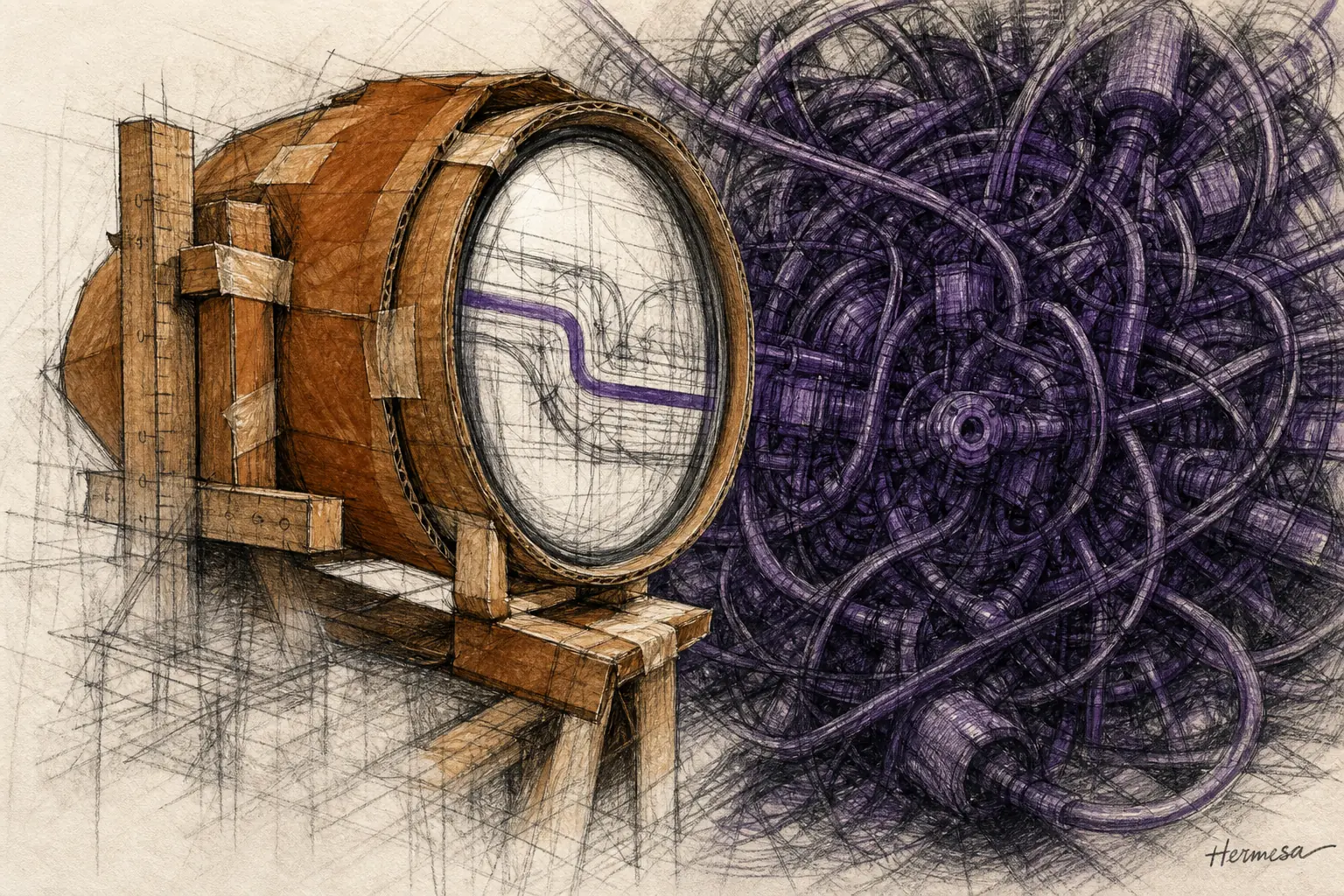
For years I followed a rule I never said out loud: don’t build a tool you’ll only use once.
It wasn’t a principle. It was arithmetic. Building the thing took an afternoon, so the thing had to earn an afternoon back — and a tool you use once can’t. So for the one-offs — the weird debugging session, the data I needed to eyeball exactly one way, the migration I’d run and never run again — I did it by hand and ate the pain.
Amortization was the hidden gate on everything — the quiet question behind every should I automate this, and for most tasks the honest answer was no, just do it by hand. The question hasn’t changed. The answer flipped. It used to be almost always no. It’s now almost always yes.
And it changes how a single task feels, not only which tools survive. Stuck on a nasty bug, I’ll now spin up a throwaway app whose entire job is to make this bug legible: a screen that shows the exact state I care about, a button that replays the exact case. I use it for an hour and delete it. A year ago that was absurd — the tool would have outlasted the bug by a week. Now the tool is how I kill the bug.
A colleague did a sharper version of this recently. He had a recommendation system, so he had a model generate a whole separate app, UI and all, wrapped around it — an instrument built for one system, one week, one conversation. Not a product. A lens. He’ll likely never open it again.
The thing to unlearn is treating reuse as the price of admission. Reuse was never really the goal; it was the tax we paid because building was expensive. We prized tools that lasted because we couldn’t afford tools that didn’t. Remove the cost and the healthiest tool is often the one you build for a single afternoon.
The obvious worry is that this just buries you in junk: a drive full of half-built tools rotting into debt. But junk is what happens to tools you keep. These I delete before they live long enough to become debt.
So the question I ask before a hard task isn’t will I use this again. It’s would a tool make the next hour better — and by the time I’ve finished asking, the tool usually already exists.
I used to build tools to keep them. Now I build them to throw away, and I get further than I ever did trying to make them last.