The Personal CLI Compounds
Personal automation stops being scripts I run and becomes capabilities my agent can use.
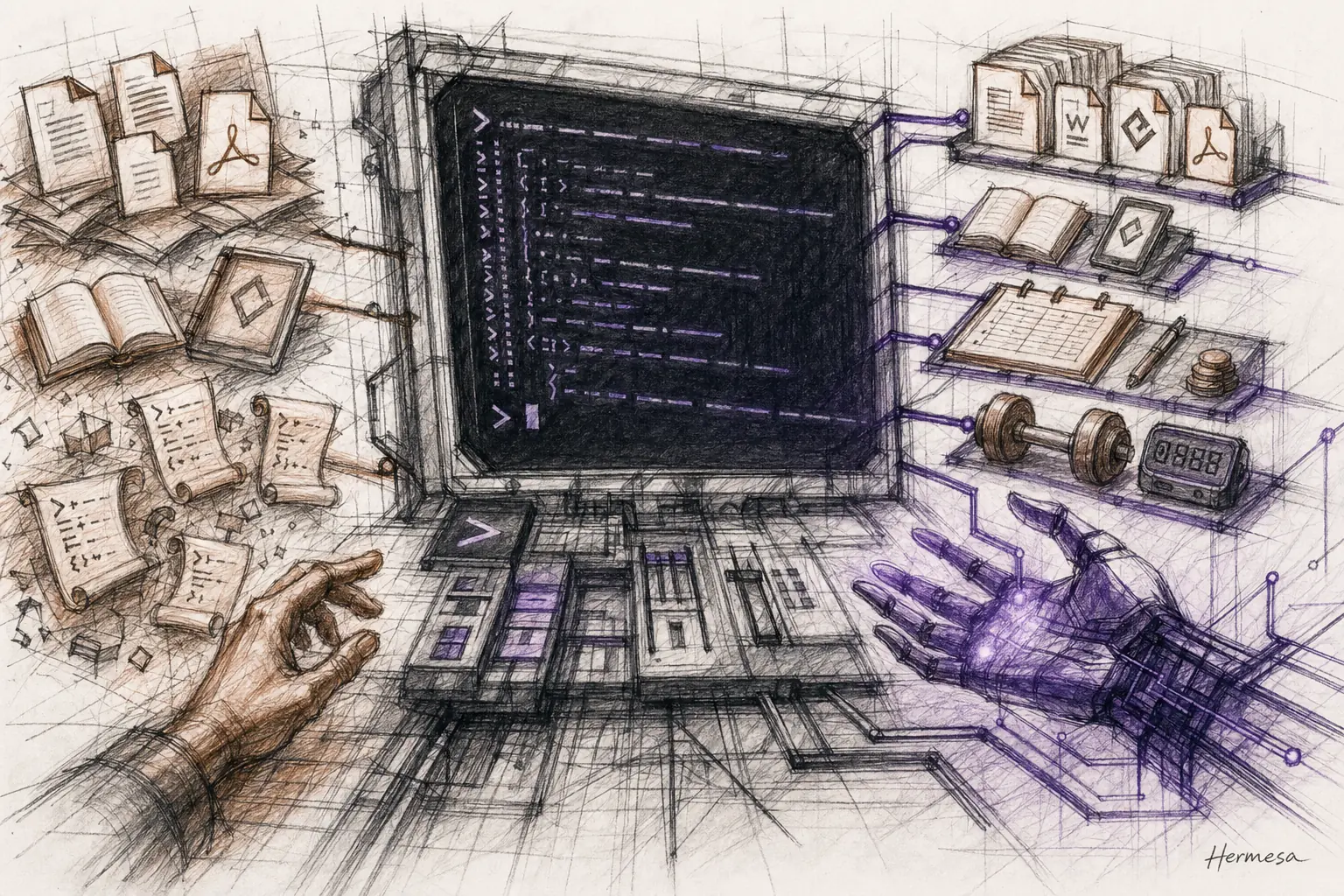
I started writing custom scripts because I am exactly the type of person who refuses to pay $5 to convert a file.
DOC to DOCX.
EPUB to DOCX.
PDF cleanup.
Random format conversions that websites wrap in ads, subscriptions, and artificial limits.
So I wrote Python for it.
At first it was just a simple CLI. A few commands to remove annoying friction from my life.
But over time, the pattern expanded.
I noticed I was building small tools for everything: budgeting, project workflows, gym sets, document processing, research, content, automation. Different areas of life started getting their own scripts.
And then it became a habit:
be obsessed with polishing your processes, because process improvements compound.
One script saves 3 minutes.
Ten scripts save attention.
A hundred scripts become infrastructure.
Before AI engineering became mainstream, my personal CLI was already growing. It was messy, practical, and built around my actual life, not some abstract productivity framework.
Then models got good.
And the CLI exploded.
Suddenly every small tool I had written became more valuable, because agents could use them. The interface was no longer only for me typing commands. It became an action layer for AI.
This clicked especially after the AIOS / OpenClaw concept.
If an agent needs to operate in your world, it needs tools. Not just browser access. Not just chat. It needs reliable commands that map to real actions.
And my CLI was already that.
It was the bridge between intent and execution.
Instead of explaining every tiny step, I can say what needs to be done, and the agent can call the right tool.
That is the real unlock:
personal automation stops being “scripts I run” and becomes “capabilities my agent can use.”
So now I think every builder should have a personal CLI.
Not because terminals are cool.
Because your workflows are your operating system.
And if you keep polishing them, one day your AI will inherit something much better than prompts:
it will inherit leverage.