Read the Incentives, Not the Predictions
Everyone is forecasting AI. The loudest forecasts come from the people with the most expensive reason to make them.
For weeks I ran three Claude Max subscriptions in parallel and hit the daily limit on all three, every day. Call it AI psychosis — the fascination kind, not the doom kind. I was trying to brute-force one question: where is this actually going?
I never got the answer. I got the opposite of one. We are early. Absurdly early. The ground is still moving under everyone’s feet, and you cannot forecast the finish from a standing start in the first hundred meters.
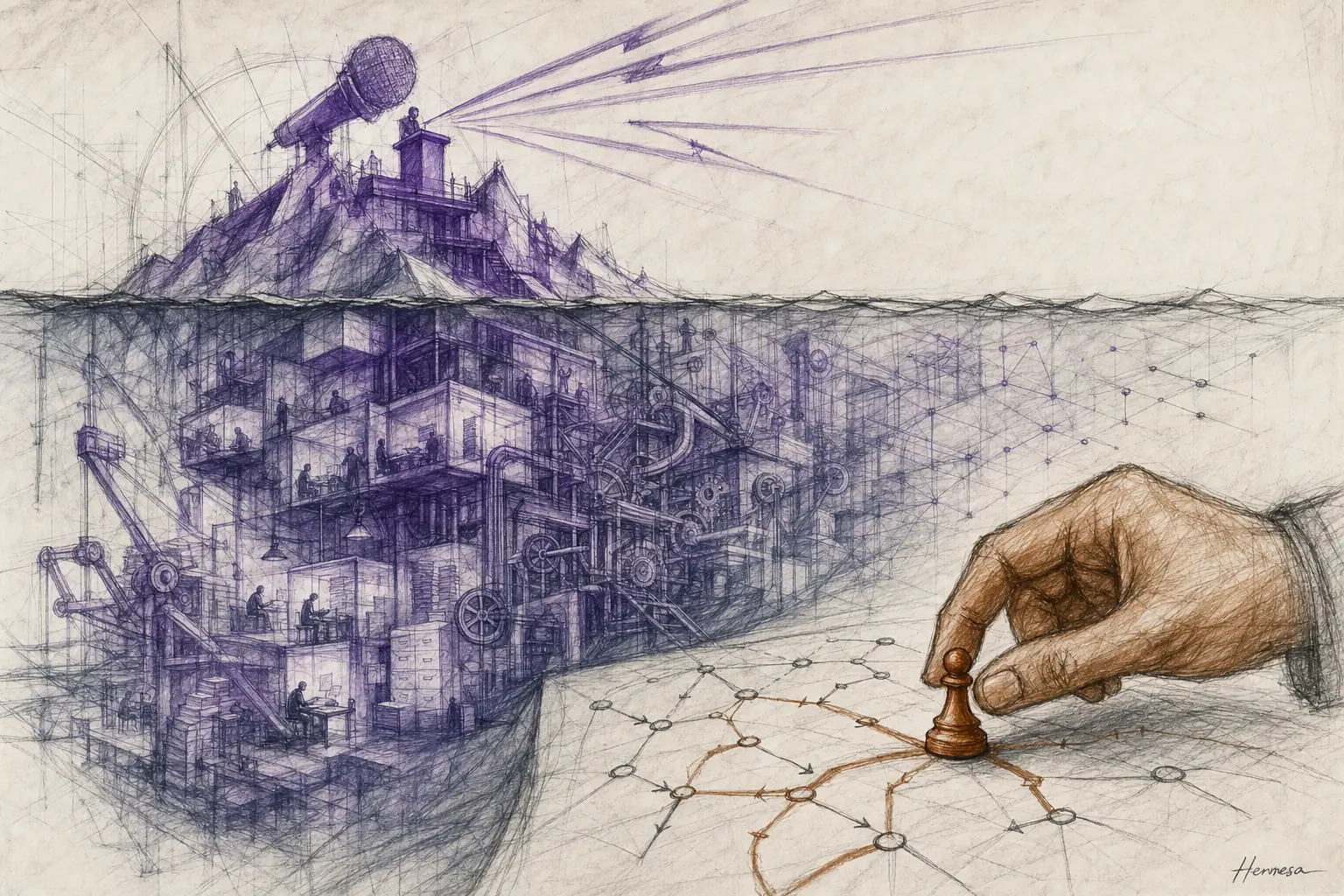
Here’s how early: we don’t even have the instruments to measure it yet. The sharpest attempt I’ve seen is MIT’s Iceberg Index, which maps not which jobs vanish but which tasks inside them AI can already do. The visible part — the tech-sector exposure everyone argues about — is around 2.2% of US wage value. The whole-economy number is 11.7%, five times larger and sitting below the surface, in the back-office and administrative work nobody’s pointing a camera at. GDP can’t see any of it. The most consequential economic shift of our lifetimes is happening mostly underwater, beneath the instruments we built to watch it.
Which is inconvenient, because everyone is forecasting anyway. And the loudest forecasts come from the people with the most expensive reason to make them.
Watch the cycle. An Anthropic or OpenAI CEO takes a stage, and out come the claims — AGI within arm’s reach, the job apocalypse, stakes at the level of the species. Then watch where the claim goes next: into a fundraise. These companies have an appetite that doesn’t fit on the planet — there are people seriously sketching datacenters in orbit. An appetite that size needs a story that size. You don’t raise the GDP of a mid-sized country by promising a useful autocomplete. You raise it by promising the last invention humanity will ever have to make.
Now look at Google. Same frontier, same race, a model that trades blows with the best of them. And a notably quieter mouth. Part of that is the balance sheet: Google is wildly profitable, its core business prints the money that funds the research, and nobody there has to take a stage and sell a prophecy to keep the lights on. The story isn’t load-bearing for survival, so it doesn’t have to be loud. The framing out of that camp is multiplication, not replacement — AI as the thing that makes a person better at what they already do. Different position, different incentive — same race, opposite volume.
Reading the incentives doesn’t tell you who’s right. The hype camp could be correct — maybe it really is the last invention. The multiplier camp could be correct — maybe it’s the most powerful tool we’ve ever held and nothing more than that. The incentive-read tells you exactly one thing: why each of them is selling the story they’re selling. It clears the noise. It does not hand you the answer.
So you can’t borrow a conclusion. Not from a CEO with a round to close, not from Google’s quieter confidence, not from me. From your own judgement, or from no one — and this early, judgement is the one asset that compounds. Everything else is a guess wearing a confidence costume.
And judgement, this early, isn’t a forecast. It’s a practice. There’s a decision model I lean on — WRAP, from Chip and Dan Heath’s — and the letter that earns its keep right now is the last one: P, prepare to be wrong. You don’t pick a future and brace for it. You map the scenarios, place a bet you can survive losing, and watch which way the ground actually moves. My own bet is deliberately boring: build skills and judgement that pay off whether this turns out to be the last invention or just the best tool I’ve ever held. Forecast less. Scenario-map more.
Because here’s the thing I’m actually sure of: I’m not scared of where this goes. I’m fascinated by it — by what it already does for me, and by what it might. Nobody knows what comes next, and that isn’t a reason to wait for someone who claims they do. It’s the reason to build the one thing that’s actually yours to build.
Place your own bet.