I asked an agent for submission guidelines. It found casino links.
An agent collecting a scientific journal’s submission requirements spotted gambling links. An accidental discovery got me thinking about cheaper attacks and cheaper defense.
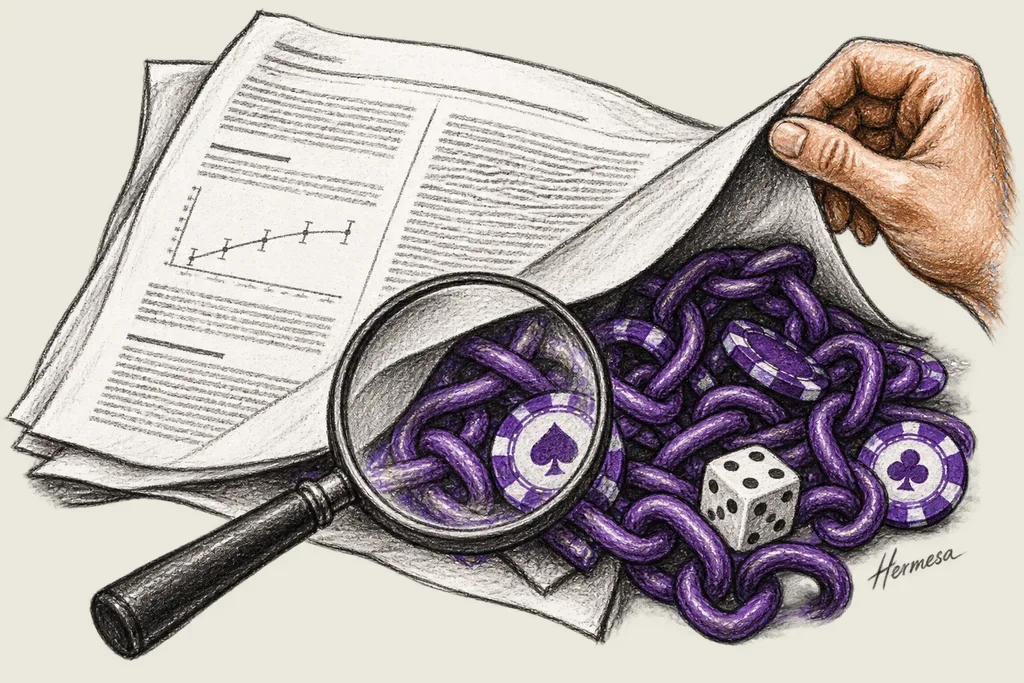
I wanted to share how I use agents to write manuscripts for scientific papers. It turned into a story about a hijacked scientific journal’s website.
My workflow is fairly predictable. I run the experiments, collect the data, and then sit down to write the manuscript.
That also means figuring out how a particular journal wants it formatted. I usually ask an agent to read five recent papers, find the submission requirements on the journal’s website, and build a reusable skill from those examples. I’ve done this several times. The pipeline works well.
This time, the agent came back with an unexpected observation: there were some very strange casino links on the website.
It didn’t tell me where.
So I still had to spend some time digging before I could confirm what it had found. One page contained 98 links to gambling websites. Someone appeared to have compromised the journal’s site and stuffed it with links to boost those sites’ search rankings.
I was trying to format a paper.
That accidental detour got me thinking about the economics of cybersecurity.
I used to work at a company where we built websites specifically for training white-hat hackers. A lot of the work involved patiently checking things: configurations, exposed surfaces, possible vulnerabilities. Knowing what to look for mattered. So did having the time to look.
Agents make parts of that work much cheaper. You can hand off checks that previously required someone to sit there and go through them. That lowers the effort needed to look for a way in, and I expect more people to try.
But the same change also makes defensive work cheaper.
My agent spotted something suspicious while doing an entirely different job. It wasn’t conducting a security audit. It was collecting submission requirements, and the casino links were strange enough to catch its attention.
There’s a limit to what this story proves. Finding spam on a compromised page is a much easier task than finding the vulnerability that let someone put it there. And the agent’s report still needed a human to chase down the evidence.
Even so, that’s useful work I hadn’t asked for.
I don’t know which side benefits more as these tools improve. Cheaper attacks don’t automatically mean that cheaper defense keeps pace. Someone still has to investigate, fix the problem, and keep the system running.
But when I think about people using agents to probe my own websites, I also think about how much easier it becomes for me to check them.
An interesting world to be writing papers in.