The Engineer Is No Longer the Main Author
In brownfield systems, AI shifts engineering value from writing code to preparing context, orchestrating tools, and verifying consequences.
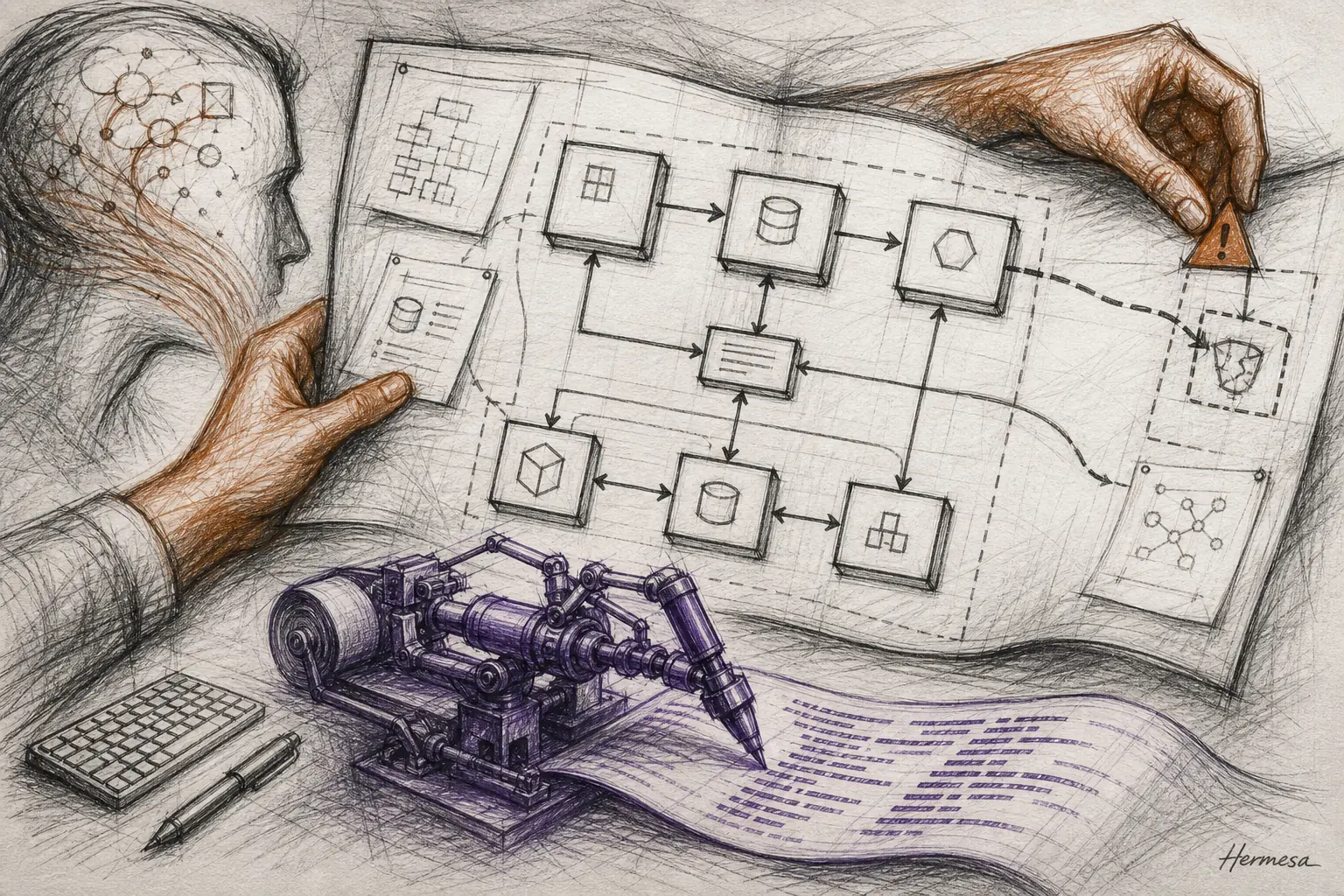
A year ago, on a team call, we settled on a comfortable consensus: AI is magic in greenfield and buys you maybe 10% in brownfield. Too much legacy, too much context, too many ways to break things nobody remembers building. I no longer believe the second half. Not mainly because the models got better — they did — but because the engineer is no longer the main author of the lines of code. In brownfield, that changes everything.
The old role: code author. You wrote line by line, kept the syntax in your head, read the docs so you wouldn’t have to read them twice. Value was implementation speed. Seniority meant you could fix the gnarly corner of the system in one sitting, because the whole map lived in your memory. Or in Roma’s, whom new hires were told to go ask, weeks before their first PR.
The new role: context engineer. You orchestrate the system instead of typing into it. You prepare the context and the tools: documentation that lives next to the code, a domain glossary, the architecture written down, MCP wired up. You curate the docs and the agent workflow. And you verify intent and consequences: did we build what we meant to, and what else did it touch.
The value shifted with the role: from typing speed to domain expertise and engineering judgment. Typing is worthless now; the model types faster than all of us combined. What’s left is what was always the hard part — knowing the domain, sensing the system, saying “this will break something three services away.”
The job title survived. The map just stopped living only in Roma’s head.