The spreadsheet I didn't open
A huge project needs one answer before any production code: what's in V1? Instead of a spreadsheet, I built a page where AI, BE, data and the rest size their own modules and we drag scope between lanes.
We’re about to start a huge project at work. AI, BE, data and the rest each build a piece of it. Before anyone writes production code, we need one answer: what’s in V1?
The usual tool for that is a spreadsheet. Rows of modules, a column per discipline, a colour for “maybe later”. I don’t like my experience with Excel for this, to be honest. The process ends up fitting the grid.
So I built a page that fits ours.
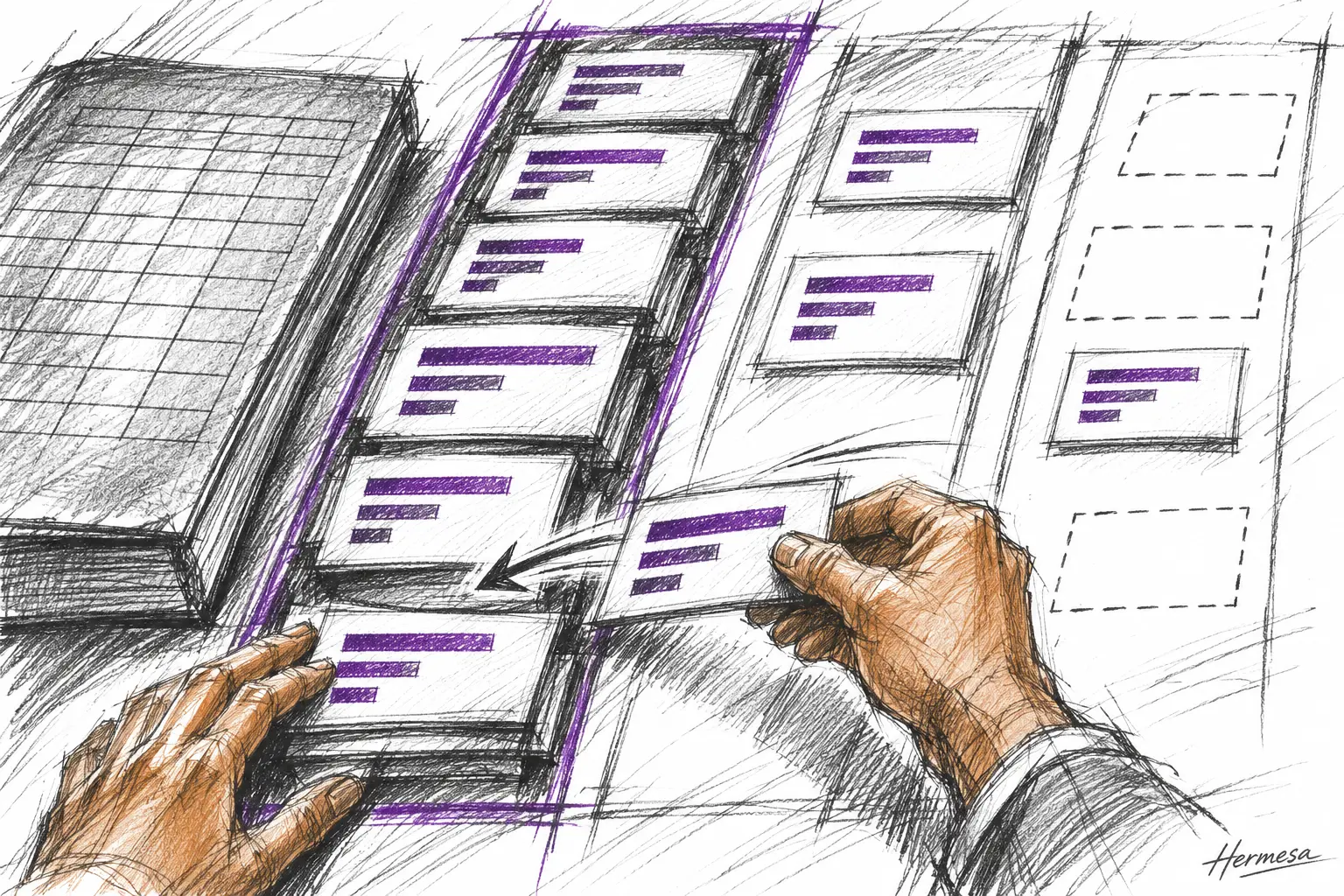
It’s a Claude artifact with a shared database, same as the retro board. One page, three lanes: V1, Next, Later. Every module is a row. Each tech lead sizes their own column, from XS for a day up to XL for four weeks. There’s also “n/a”, and “?” for when we need to talk first.
Drag a module from Next into V1 and the lane header recounts the days for each column. Drag it out and they drop. That’s the planning meeting: we move rows until every total is one we can live with.
Two things no spreadsheet gave me. A button that shows what each lead still hasn’t sized in V1. And a “was Next” tag on every module that moved from where it was first proposed, so scope changes stay visible.
Why spend this much care on planning?
I can generate 600k lines of code in one PR just to see how something works. I do. That’s an experiment, and nobody pays if it’s wrong.
A huge first production release is different. The stakes are high, and the expensive mistakes are scope mistakes, made before any code exists. Writing the code got fast, so the hours belong in planning now.
And the planning tool doesn’t have to be the one everybody already has. Describe how your team decides, then build the page that does exactly that. Mine is one HTML file.
Scope is a handful of leads agreeing on what they can build by a date. Give them a page made for that conversation.