What the Multiplier Multiplies
In May I said AI is a multiplier, not a metric. The role change on brownfield shows the other term of the equation.
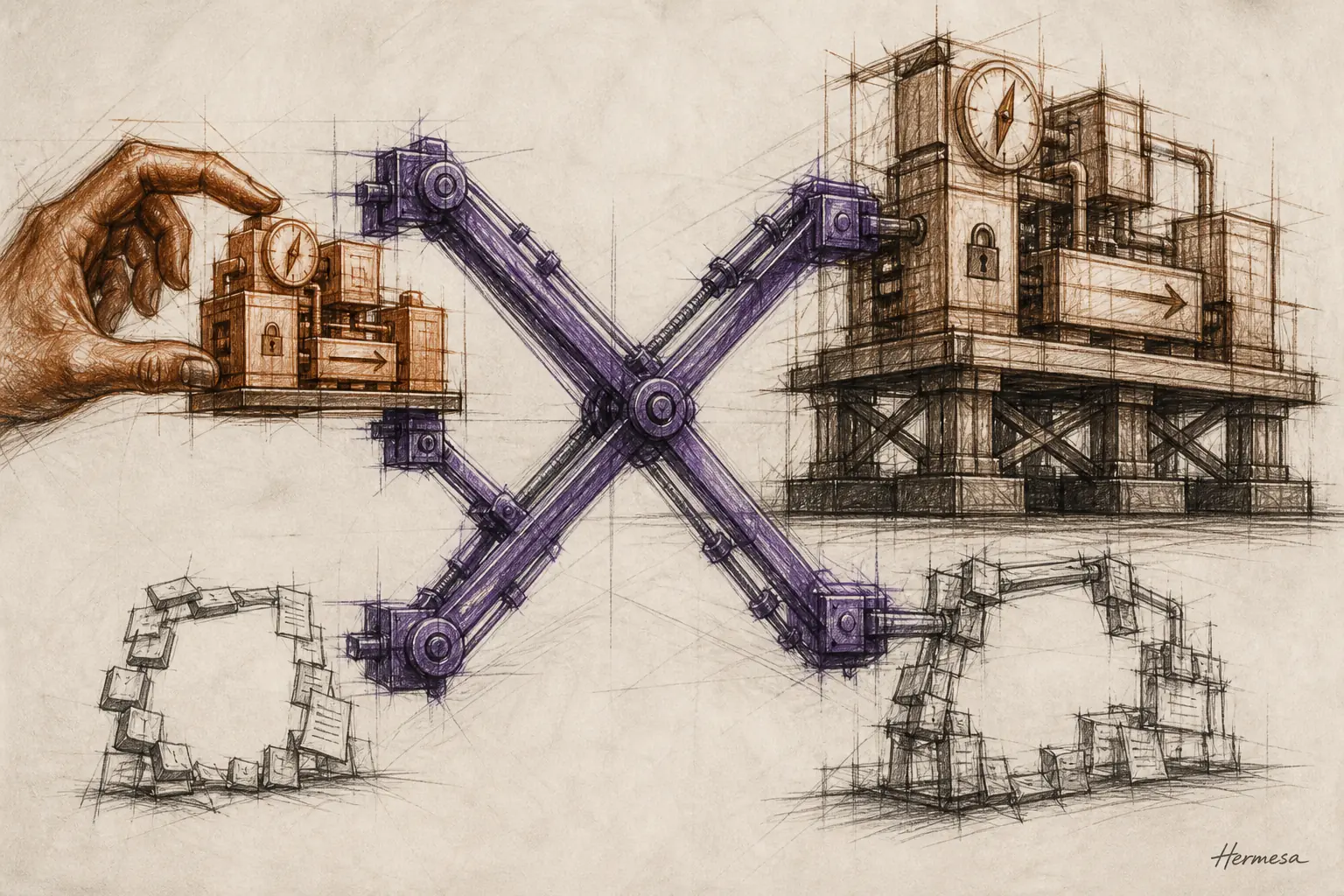
In May I argued that AI is a multiplier, not a metric. I spent that whole post on the multiplier and never named the other side of the equation.
A multiplication has two terms. Here’s the second one.
Look at what production used to pay an engineer for. Writing code line by line. Keeping syntax in memory. Reading library docs faster than the next person. Speed of implementation as the scoreboard. That was the job description, and being good at it was a career.
Now look at the same role on a brownfield codebase today. The engineer prepares context before the model writes anything — the rules, the memory bank, the MCP servers. Everything a senior hire would need to be told on day one, written down for something that starts every session as a stranger. And when the diff comes back, the engineer reviews it for intent, not style. The model’s style is fine, infinitely and for free; what needs verifying is whether the change does what this system needed →.
Every skill in the first list, AI took. Every task in the second list, it created.
What the first list has in common: none of it was ever the value. It was the cost of delivering the value — a typing tax between knowing what the system needs and the system having it. The tax was invisible while everyone was paying it, because paying it took most of the day.
What the second list has in common: all of it is judgment. Knowing what this codebase is for, which invariants are ancient decisions and which are accidents, what a correct change looks like before it exists. Domain expertise and engineering competence — the two things the old job description never measured, because the typing kept us too busy to price them.
That’s the multiplicand.
The multiplier is roughly the same for everyone now — same models, same subscriptions, same tools. The craft of driving them varies, sure, but that gap closes in months; the base takes years to build. Nobody wins the equation on the ×. So the entire difference between engineers just moved into the term the old job description treated as background: what the engineer knows about the domain, and how sound their judgment is when nobody is checking the syntax.
Zero times anything is zero.
AI didn’t change what engineers are worth. It stopped charging the typing tax — and left the worth standing in the open, with nothing left to hide behind. Which is uncomfortable news in exact proportion to how much of your value was the typing.